

Table of Contents
- What Is a Network Handoff?
- Why Distributed Workforces Depend on It
- The Business Impact of Poor Handoffs
- Where This Matters Most
- Why Network Handoffs Fail
- The Role of Intelligent Network Management
- How Sparro ARC Supports Seamless Connectivity
- Designing for Seamless Handoffs
- What to Look for in a Solution
- Final Thoughts
Distributed work is now standard across many industries. Teams work across offices, in homes, and in the field. Their devices move between networks all day.
This shift creates a new challenge: Connectivity must follow the user, and it cannot break when the environment changes.
Seamless network handoffs solve this problem. They allow devices to switch between networks without disruption. The user stays connected, productive, and secure. This reduces frustration, downtime, and the need for technical support calls.
What Is a Network Handoff?
A network handoff happens when a device moves from one connection to another. This can include switching between Wi-Fi networks, cellular networks, or secure enterprise access points.
A seamless handoff means the transition happens without delay or dropped sessions. Applications continue to run, calls don’t drop, and data remains secure.
Without this continuity, users feel the negative impact right away.
Why Distributed Workforces Depend on It
Distributed teams rely on constant access to applications and data. Even small disruptions can slow work or create risk.
Today, nearly one in four U.S. employees works remotely at least part of the time. This represents more than 35 million people. Over 90% indicate that they would prefer hybrid or fully remote work.
As work spreads across locations, networks must support movement, not fixed environments.
“Enterprises expect applications to keep performing without breaking, even as devices move from one network to another,” said Jason Wickam, Vice President and General Manager at Sparro.
The Business Impact of Poor Handoffs
When network transitions fail, the effects spread quickly.
Lost Productivity
Dropped connections interrupt workflows, thus requiring employees to reconnect, restart tasks, or repeat steps.
Poor User Experience
Video calls freeze, applications lag, and frustration grows, especially for customer-facing roles.
Revenue and Customer Impact
Disruptions affect live interactions with customers, sales conversations stall, and service experiences suffer.
Increased IT Burden
Support teams handle more tickets related to connectivity issues, and troubleshooting becomes complex across environments.
Security Gaps
Inconsistent handoffs can expose vulnerabilities, since devices may connect to unsecured networks or lose policy enforcement.

Where This Matters Most
Some industries depend on seamless handoffs more than others.
Logistics and Transportation
Workers move between warehouses, vehicles, and outdoor environments, and connectivity must follow them in real time.
Healthcare Systems
Clinicians move across buildings and departments; thus, devices must stay connected to critical systems without interruption.
Retail Operations
Store associates rely on mobile devices across large spaces. Handoffs must support transactions and inventory updates.
Field Service Teams
Technicians work across multiple sites each day. Reliable connectivity ensures access to job data and communication tools.
Why Network Handoffs Fail
Seamless handoffs require coordination across multiple systems, but failures often happen during key transition points.
Network switching can introduce latency as devices move between connections. Authentication may need to restart, and policies may not carry over between networks. These gaps create delays, dropped sessions, and inconsistent performance.
The Role of Intelligent Network Management
Seamless handoffs do not happen by accident; rather, they require coordination across networks, devices, and policies.
Enterprises need visibility into how connections perform across environments, as well as the ability to manage transitions in real time. This is where intelligent network management platforms play a key role.
How Sparro ARC Supports Seamless Connectivity
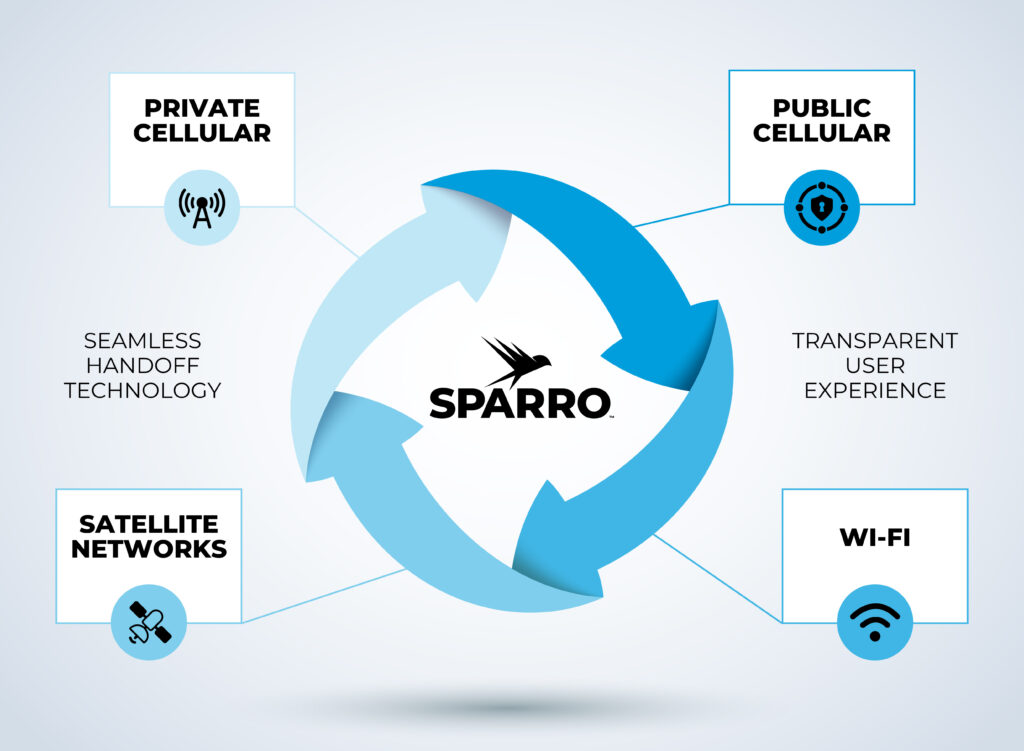
Sparro ARC (Adaptive Route Control) helps enterprises manage connectivity across distributed environments. It provides centralized visibility and control over performance in converged network environments.
With Sparro ARC, organizations can:
- Monitor connectivity across locations and devices.
- Identify and resolve network performance issues quickly.
- Maintain consistent policy enforcement.
- Support smooth transitions between networks.
By centralizing network monitoring and management, Sparro ARC helps ensure policies and performance remain consistent as users move between environments.
This approach not only helps reduce disruptions and improve user experience but also supports security and operational efficiency.
As Wickam explains, “We’re focused on converging separate networks into a single plane, where applications don’t even know they’re switching.”
Designing for Seamless Handoffs
Enterprises cannot treat handoffs as a byproduct of connectivity; they must design for them from the start. This requires alignment across network architecture, device behavior, and application requirements.
First, networks must prioritize continuity at the session level. It’s not enough to maintain signal strength; applications also need persistent sessions as devices move between access types. This reduces the need for reauthentication and prevents dropped transactions.
Second, identity and policy must travel with the user. Access controls should not reset when a device changes networks. A consistent policy layer ensures that security and performance remain stable across environments.
Third, visibility must extend across the full connectivity stack. IT teams need insight into where handoffs occur and how they perform. This includes latency during transitions, failure points, and user impact. Without this data, teams cannot isolate or resolve issues quickly.
Fourth, coordination across network types is essential. As Wickam notes, “Private cellular, public networks, Wi-Fi, and edge infrastructure often operate independently. That approach creates performance and visibility gaps.” These silos create friction during transitions. In contrast, a unified approach allows networks to share context and make better decisions in real time.
Finally, application awareness plays a growing role. Not all traffic has the same requirements. Real-time applications need priority during transitions. Background processes can tolerate minor delays. Intelligent routing can account for these differences and optimize the experience.
When these elements come together, handoffs become predictable and reliable. Users stay connected. Applications remain stable. IT teams also gain control over performance across environments.
What to Look for in a Solution
Not all solutions address handoffs effectively, so enterprises should focus on key capabilities.
Real-Time Visibility
Teams need insight into performance across all environments.
Policy Consistency
Security and access policies must follow the user.
Cross-Network Coordination
Solutions must manage transitions across Wi-Fi, cellular, private cellular (PCNs), LEO (Starlink / OneWeb), and other connections.
Scalability
The platform must support growth across users, devices, and locations.
Final Thoughts
Distributed work is not a temporary shift, but instead reflects a long-term change in how organizations operate.
As more work happens across locations, the cost of poor connectivity continues to rise. Small disruptions can create larger operational and customer impacts.
Seamless network handoffs are now essential, because they support productivity, user experience, and security across environments.
Organizations that prioritize this capability will deliver better outcomes for both employees and customers.
Learn how Sparro ARC can support seamless connectivity across your distributed workforce. Connect with our team to explore how to improve performance, reduce disruptions, and maintain control across every environment.